August 11, 2026
Reading your own hairline: how to tell what stage you are at
Thinning, receding or shedding? Knowing which pattern you have changes which treatment makes sense.
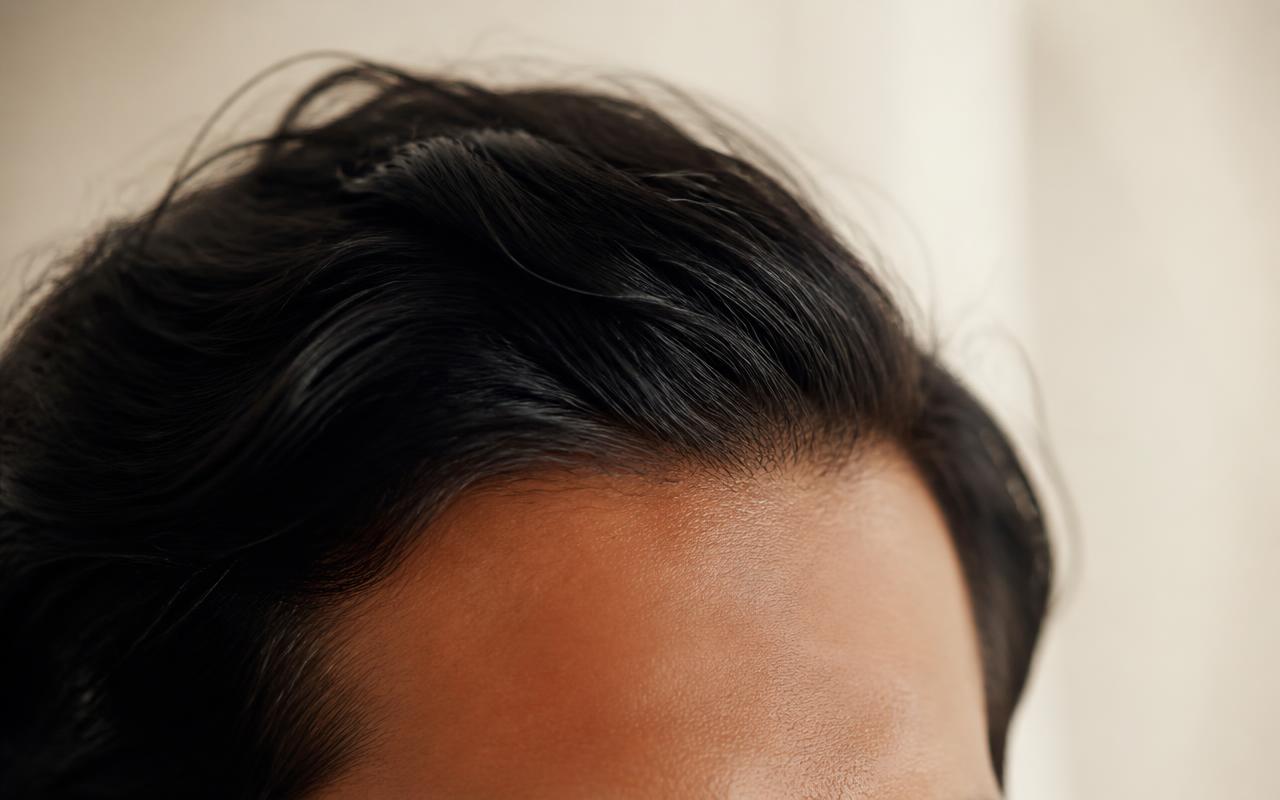
Before choosing a treatment, it helps to name what is happening.
A receding hairline usually moves back at the temples first, creating a deeper M shape. It is the most common early male pattern and often the one people notice in photos before the mirror.
Diffuse thinning shows up as reduced density across the top rather than a moving line. Hair still covers the scalp but the part looks wider and light shows through more than it used to.
Crown thinning starts at the swirl and spreads outward. Because you rarely see the back of your head, it is frequently the most advanced area by the time it is noticed.
General shedding — more hairs in the brush or drain for a few weeks — is often temporary and stress- or illness-related. It behaves differently from pattern loss and can resolve on its own.
An easy check: compare a photo from two or three years ago in similar lighting. Line movement points to pattern loss; even coverage that looks thinner overall points to density change.
If loss is patchy, sudden, or comes with scalp irritation, see a clinician — that pattern is not typical androgenetic hair loss.
Not sure what to start with?
Answer nine quick questions and get a recommendation matched to your hair, routine and budget.
Take the quiz